Specialism · B2B tech marketing and sales

We have sat on your side of the demo.

Semiconductors, AV, SaaS and hardware: technical buyers who read the spec before the brochure, procurement cycles measured in quarters, and a sale that is won by being useful long before anyone is ready. Most of the client list is already here.

  • Technical audiences
  • Long cycles
  • Procurement
  • Conference-led
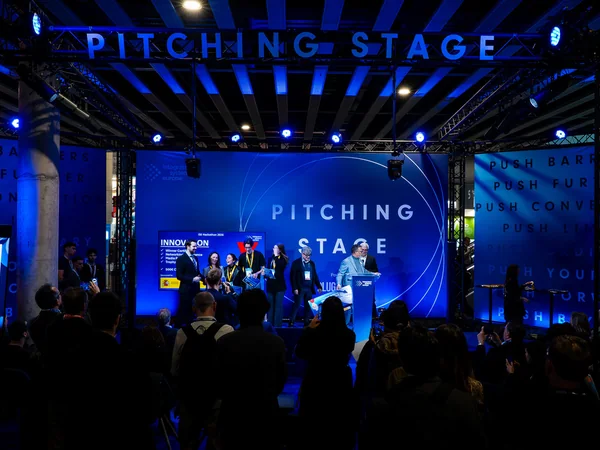
A pitching stage at a technology show, a company presenting to a standing audience

What it covers

How selling to technical buyers differs.

Written for people who check

Technical buyers assess a company by how precisely it talks about its own work. Vague competence claims read as nothing to say, and a reader who can tell the difference will notice immediately. We write to the level of the person reading rather than down to an imagined general audience.

Built for the real cycle

A three month campaign ends before this audience has finished deciding. Plans here are built to still be running when the budget finally moves, which usually means fewer, better placed things repeated for longer rather than a burst and silence.

Proof a technical reader accepts

Not a testimonial about how lovely you were to work with. A number, a configuration, a before and after, or a named deployment. The specific claim that can be checked beats the general one that cannot, every time, with this audience.

One message, three audiences

The engineer wants to know it works, procurement wants to know what it costs to run, and the person signing wants to know what happens if it fails. The same launch has to answer all three without diluting into something that answers none.

Where the conversations happen

For most technical sectors the show floor is still where the real conversations start. The plan usually runs through the calendar of events, because that is where a year of email gets compressed into four days of meetings.

Who this is for

Four sectors, four different buyers.

Most of the client list sits in one of these. The work is not interchangeable between them.

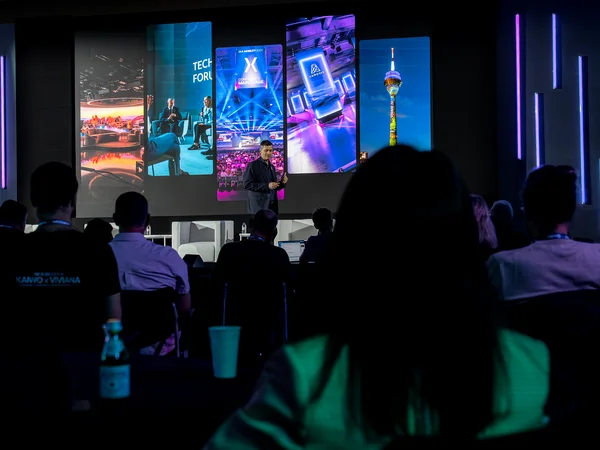
An audience watching a wall of lit product screens in a darkened conference hall

Semiconductors

Long qualification, named accounts, and a buying committee that includes people who will never take your call. The work is being precise and present for the year before anybody is ready to move.

Audio visual

Specified by integrators and consultants long before the end client sees a price. The show calendar decides the year, which is why this sector leans hardest on the events service.

SaaS

Shorter cycles, but a crowded category where nobody reads another all in one platform. The gap here is almost always positioning rather than volume.

Hardware and devices

A physical product with a distribution layer in front of it. Two audiences at once, the partner and the end user, and they do not want the same message.

The cycle

Most of the decision happens before you hear about it.

  1. They find you quietly

    Months of reading before a form is ever filled in. Search, a datasheet, a conference talk, a colleague. None of it shows up in your pipeline, and most of the decision is made here.

  2. They check whether you know the work

    The first real test is whether you can talk about your own product precisely. This is where most B2B tech marketing loses, by being general in front of people who deal in specifics.

  3. A committee forms

    An engineer, someone in procurement, and whoever owns the budget. Each one needs different proof, and the deal stalls on whichever of the three you did not answer.

  4. It lands on a calendar you do not control

    Budget cycles, certification windows, the show where the decision gets made. Being present when that moment arrives matters more than being loud six months before it.

Proof

Where this has been done before.

Fintech

Partnership coordinator for BUNQ entering the Spanish market.

300+new users in the first 2.5 months
A local partner network built from nothingRead the BUNQ case
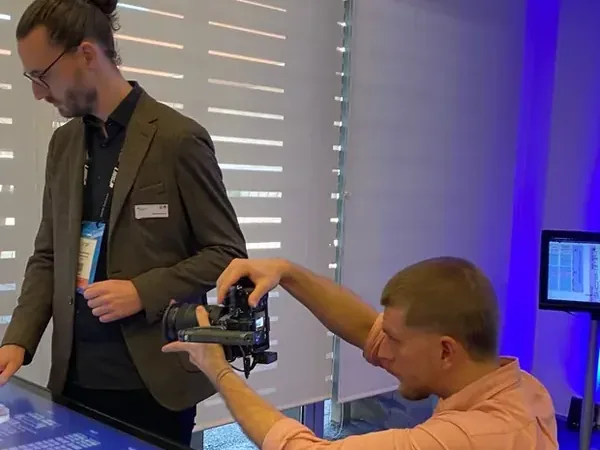
A product demonstration on an interactive table being filmed on a gimbal

Questions

Tech, answered.

Get started

Selling something technical?

Tell us who buys it and how long they take. Fifteen minutes, free, and you leave with a view either way.